

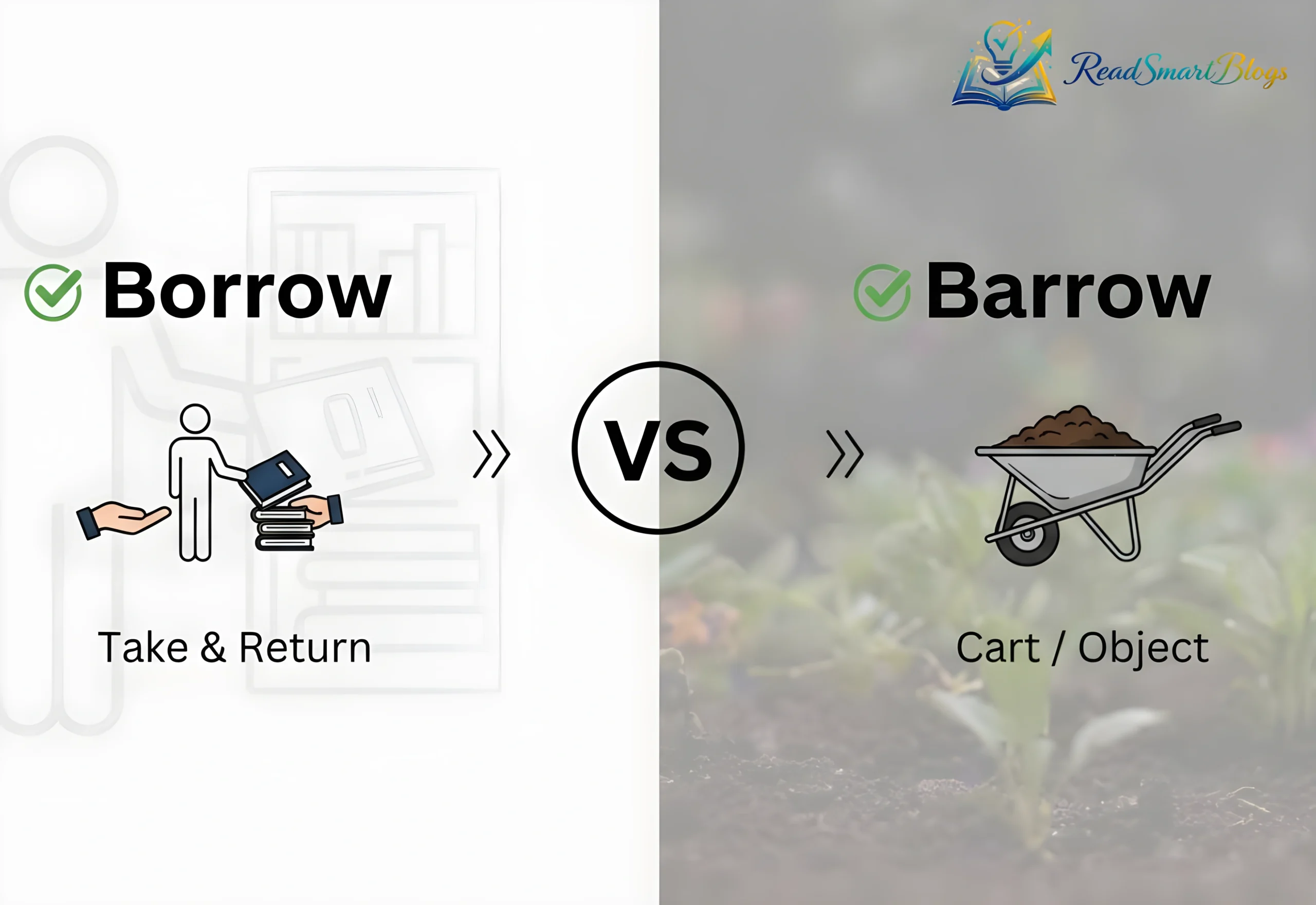
Borrow or barrow tripped me up completely last weekend when I was texting my uncle. I needed his yard cart to move some heavy rocks away from my driveway. I typed my message and stared blankly at the screen for ten solid minutes. I realized I had absolutely no idea which spelling to send him. My thumb hovered over the glowing screen while I questioned everything I learned in school.
We all freeze up when two common words sound exactly the same. You want to ask for a favor without looking foolish to your family. You type one letter and then erase it immediately. It is a very frustrating experience for anyone trying to send a quick text. I spent the next hour figuring out the simple rules so I could share them with you right now.
In This Article
The Root of the Spelling Confusion
The English language loves to play tricks on our ears and eyes. People speak very quickly when they are working outside or talking over the phone. The middle vowels completely disappear into a blurry sound. You hear the firm starting letter and the soft ending noise. Your brain fills in the gaps with whatever spelling looks familiar. That is why these two words cause so much daily trouble.
You take that blurry sound straight to your computer keyboard later in the day. Your fingers hesitate because autocorrect accepts both options without giving you a red warning line. Your phone assumes you know exactly what you want to type. It leaves you entirely on your own to solve the spelling puzzle. We have to look closely at what each word actually does.
Learning the Action Verb
The word with the letter O describes a very specific human action. It means you are taking something from someone else for a short time. You make a firm promise to return the item exactly as you found it. Trust is the hidden foundation of this temporary exchange. You use this verb when you ask a bank for money. You also use it when you take a book from the local public library.
It is very helpful to think of a timeline when you use this spelling. The action only works if there is a future date for the return. You cannot keep the item forever or else it becomes stealing. The O spelling always points to a temporary arrangement between two people. You give your word that the item is completely safe in your hands.

Recognizing the Physical Object
Now we look at the version that uses the letter A in the middle. This word represents a heavy object that sits quietly in your tool shed. A wheelbarrow is a common yard cart used for hauling dirt and gravel. You can physically touch this item and load it with heavy garden soil. It has a single tire in the front and two long handles in the back.
History tells us this same noun also describes a giant hill of dirt. Ancient people used to build these large earth mounds to cover important gravesites. You might see a tiny woodland Creature running across one of these grassy hills in Europe. Both meanings of the A spelling point to a solid physical thing. They do not describe an action or a social promise at all.
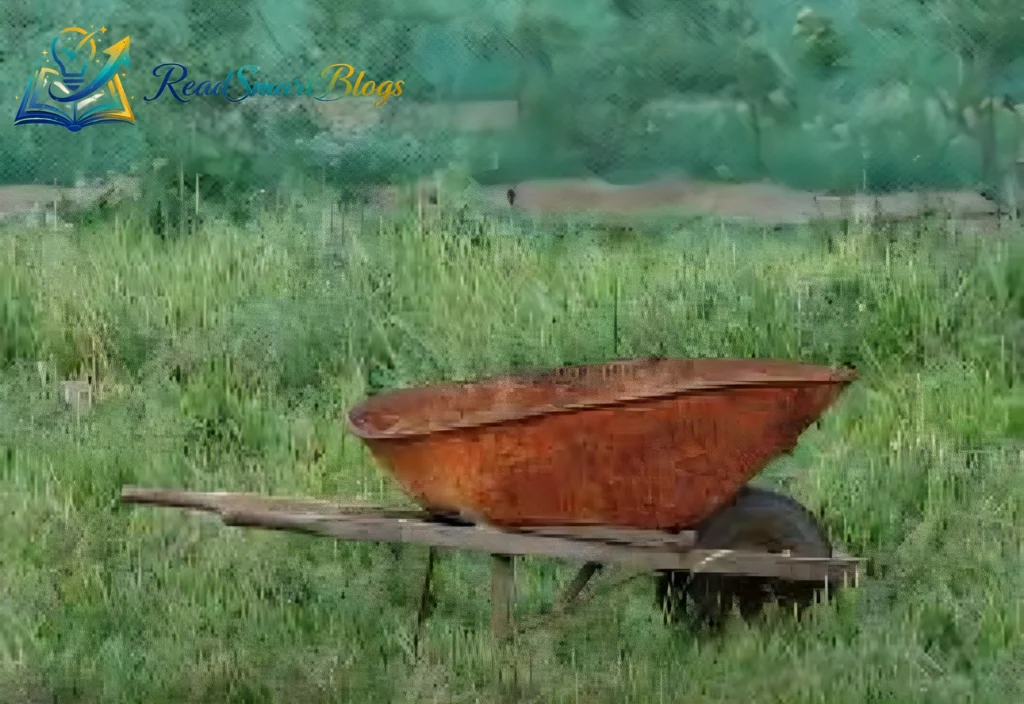
- A yard cart makes moving heavy concrete blocks much safer for your back.
- Historical earth mounds provide archaeologists with clues about ancient kings.
- Neither of these physical things relates to taking money from a local bank.
Why We Mix Them Up While Working
Yard work creates the perfect storm for confusing these two terms. Landscaping is a tough physical Activity that requires very specific tools. You often realize you are missing the exact cart you need to finish the job. You have to perform the action to get your hands on the object. Your brain tries to process the verb and the noun at the same exact second.
This mental traffic jam makes you misspell your text messages. You might ask a friend if you can take their yard cart for the day. You are thinking about the tool and the promise simultaneously. It is completely normal to write the wrong vowel when your mind is juggling two ideas. You just need a simple way to pull the two thoughts apart.
Easy Tricks to Remember the Letters
Visual tricks are the best way to lock grammar rules into your mind. Look closely at the letter O for a brief moment. It is shaped exactly like a round silver coin. Coins represent money and banking loans that must be paid back. This mental picture links the letter O to the action of taking and returning. You will always remember the verb if you think about money.
The letter A provides a very different visual clue for your memory. A capital A looks like a person pushing the handles of a heavy cart. It is a highly Creative way to picture the spelling in your head. You can imagine the top point of the letter A as the front wheel of the cart. This fun picture stops you from making mistakes on your grocery lists.
Handling Both Words Together
There will be a day when you need to type both spellings in one single sentence. You might want to ask your neighbor for their heavy cart on a Sunday morning. This is the ultimate test of your new spelling skills. You have to slow down and place each vowel carefully. The sentence might look strange but it is entirely correct.
You just write the action first and the object second. A perfect text message would say: “May I please borrow your barrow to move this dirt today?” It sounds like a silly poem when you read it out loud. Your neighbor will know exactly what you need. They might even smile at your perfectly correct grammar.
The Value of Clear Messages
Some folks believe that exact spelling is a waste of time in our modern era. They assume a simple typo does not matter if the overall message is clear. But taking time to choose the correct borrow or barrow spelling shows real respect. Your reader appreciates the effort you put into writing a clean message. It shows you care about clear communication.
Correct words prevent annoying mix ups and save everyone valuable time. A sloppy text message can force your friend to ask annoying follow up questions. You want them to say yes to your request immediately. Good spelling removes any friction from the conversation. It makes you look smart and completely reliable.
Building Good Neighborhood Habits
Asking for tools is a great way to build strong friendships on your street. People generally love helping out if you treat their property well. You must return items in better condition than when you received them. This golden rule guarantees they will say yes the next time you ask. You should always wash the mud off the tires before giving the cart back.
If you break a wooden handle on the cart, you have to buy a replacement part. Never hide damage from a friend who did you a massive favor. Honesty is the only way to maintain a good relationship over the years. A clean cart and a sincere thank you note build deep trust. Your friends will always lend a hand when you do things the right way.
- Spray the metal tub with a hose to remove sticky mud before returning it.
- Store the cart in a dry garage so the metal parts do not rust overnight.
- Check the front tire pressure to ensure it rolls smoothly for the owner.
Teaching the Rules to Children
Kids face a really hard time with words that sound the exact same. They will eventually ask you about borrow or barrow when they write school papers. Do not confuse them with boring dictionary definitions or history facts. Keep the lesson light and highly visual so their brains can absorb it. They respond much better to funny drawings and simple stories.
Draw a picture of a bank and a garden cart on a piece of blank paper. Put the matching letter right on top of each drawing in bright red ink. Stick the paper to the wall where they do their daily homework. They will learn the difference naturally without feeling any pressure. Learning should always feel like a fun game.
Moving Forward With Confidence
You never have to stare blankly at your phone screen ever again. You now possess the tools to pick the exact right word for your sentence. A simple pause to think about coins or cart handles is all it takes. You can text your friends and family without feeling anxious about grammar mistakes. The rules are actually very simple once you break them apart.
Take a deep breath before you ask someone for a favor. Think about the action you are taking and the object you need. You will type borrow or barrow correctly on your very first try. Your gardening projects and your text messages will both look fantastic. You are now fully prepared to write with total confidence.
| Feature | Borrow Concept | Barrow Concept |
| Main Dictionary Role | Action verb | Physical noun |
| Core Meaning | To take temporarily | A dirt cart |
| Common Vowel | Features an O | Features an A |
| Starting Sound | Hard B sound | Hard B sound |
| Ending Sound | Soft W sound | Soft W sound |
| Physical Interaction | Signing a bank agreement | Pushing a heavy load |
| Time Restriction | Has a return date | No time limits |
| Typical Location | Library or bank | Farm or garden |
| Number of Syllables | Two parts | Two parts |
| Plural Spelling | Borrows | Barrows |
| Past Tense Form | Borrowed | Does not exist |
| Word Origin | Old English | Old English |
FAQs That Clear Common Doubts
Can I use both of these spellings in the exact same sentence safely?
You can absolutely use both together by asking a friend to let you take their dirt cart for the day.
Why do these distinct words sound completely identical when spoken?
People drop their middle vowels when speaking quickly which makes the words blur into the exact same sound.
Will my phone autocorrect catch this specific typing error for me?
Your phone ignores this mistake completely because both spellings are valid words in the dictionary.
What is the best way to memorize the right letter for the cart?
Picture a capital A as the sloping wooden handles and front tire of a heavy garden cart.










Leave a Reply